
The education landscape in Pakistan is undergoing a profound digital transformation. By 2026, online education is projected to be a cornerstone of learning, reshaping access, delivery, and the very definition of a classroom for millions. This shift is being powered by explosive market growth, strategic technological adoption, and a pressing need to educate one of the world’s largest youth populations. The online education market in Pakistan, valued at USD 327.79 million in 2024, is forecast to reach a staggering USD 2,343.77 million by 2033, growing at a compound annual growth rate (CAGR) of 24.43%. This trajectory signals not just a trend, but a fundamental re-engineering of how knowledge is acquired and skills are built across the nation.
The journey toward 2026 is marked by both immense opportunity and significant challenge. From the bustling tech hubs of Karachi and Lahore to the remote villages of Balochistan and Khyber Pakhtunkhwa, digital learning platforms are promising to bridge long-standing educational divides. The transformation extends beyond mere digitization of textbooks; it encompasses personalized learning pathways, industry-aligned skill development, and flexible models that cater to working professionals and traditional students alike. This article explores the dynamic forces, innovative platforms, and critical hurdles defining Pakistan’s journey to a digitally empowered educational future.
Table of Contents
The Current Landscape: Understanding Pakistan’s Online Education Boom
Pakistan’s online education sector is experiencing unprecedented momentum. Revenue in the online education market is projected to reach US$83.40 million in 2025, with an expected annual growth rate of 50.52% leading to a market volume of US$428.11 million by 2029. This growth is fueled by a surging user base, anticipated to hit 7.1 million users within the same timeframe.
The market structure is diverse, spanning several key segments. It includes Online University Education from accredited institutions, a wide array of courses on Online Learning Platforms like Coursera and Udemy, and specialized Professional Certificates for career advancement. This segmentation caters to a broad spectrum of learners, from K-12 students seeking supplementary help to university graduates and professionals aiming for upskilling.
Beneath these numbers lies a vibrant ecosystem of homegrown innovation. The number of EdTech startups in Pakistan has surged from under 100 before the COVID-19 pandemic to over 450 by 2025. Platforms such as Maqsad, Taleemabad, and Noon Academy are revolutionizing the landscape with interactive, vernacular, and gamified content tailored specifically for Pakistani learners. This local innovation is crucial, as it addresses contextual challenges and curricula, making online education more relevant and accessible than global one-size-fits-all solutions.

Key Drivers Fueling the Transformation of Learning
Several interconnected factors are accelerating the adoption and transformation of online learning across Pakistan.
Expanding Digital Infrastructure
The rise in smartphone ownership and mobile internet availability is the most critical enabler. As devices and data packages become more affordable, students in remote or underserved areas can access learning platforms for the first time. Government and private sector efforts to improve 4G and fiber-optic connectivity are foundational to this access, though work remains to be done.
Demand for Flexible and Affordable Learning
There is a growing preference for learning options that are accessible anytime and anywhere. Online education provides the convenience of self-paced study, which is particularly valuable in a country where economic constraints, long commutes, or familial responsibilities can disrupt in-person learning. Furthermore, digital platforms often present a more cost-effective alternative to private tuitions or coaching centers, removing financial barriers for budget-conscious households.
A Youthful Demographic and Evolving Job Market
Pakistan has a very large youth population actively seeking educational and professional opportunities. Concurrently, the job market increasingly demands digital and specialized skills. Online platforms are uniquely positioned to offer industry-relevant courses in fields like AI, data science, digital marketing, and freelancing, directly aligning education with employment pathways.
Government Initiatives and Policy Support
The government has recognized the importance of digital literacy and is promoting technology in education. Initiatives like the “Digital Youth Hub” portal and collaborations with tech giants aim to improve skill development and digitally revolutionize the educational system. Clear policy frameworks to regulate EdTech and encourage digital readiness are evolving.
Technological Innovations and New Pedagogies Reshaping Education
The transformation is not just about moving classes online; it’s about reinventing the learning experience through cutting-edge technology and pedagogy.
Artificial Intelligence and Personalized Learning
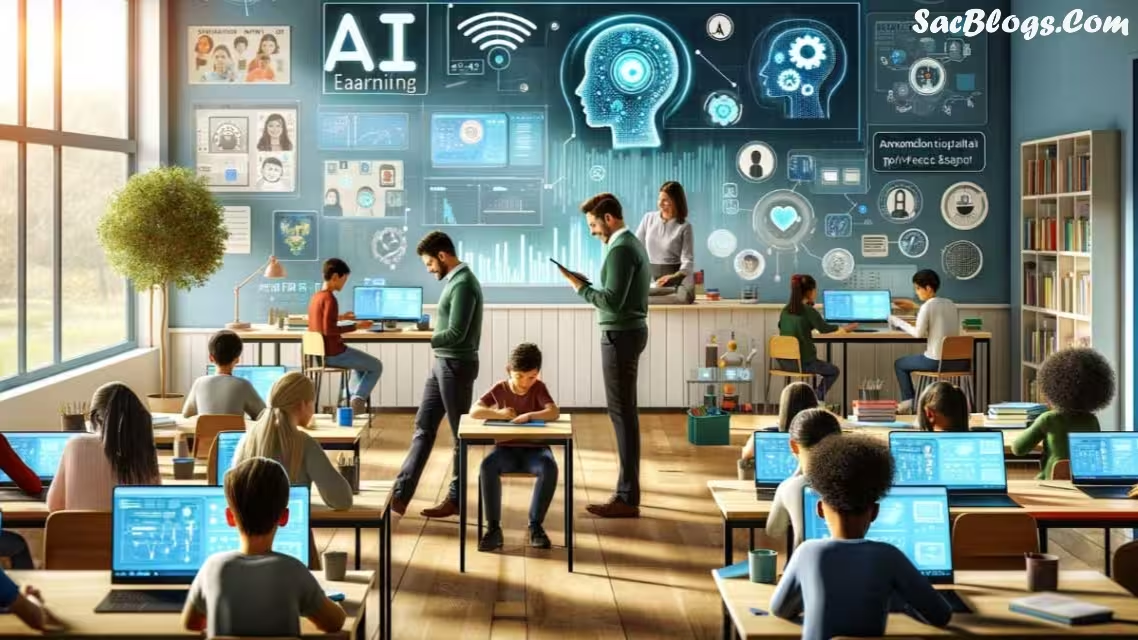
AI is powering a shift towards adaptive learning tools and AI tutors. These systems analyze a learner’s pace, identify weak spots, and provide personalized feedback and content recommendations. This move away from a standardized curriculum caters to individual learning styles, potentially improving outcomes and keeping students engaged.
Gamification and Interactive Content
To combat low motivation and engagement in remote settings, EdTech platforms are increasingly using game-like elements. Interactive video lectures, quizzes with instant feedback, badges, and leaderboards make learning more engaging, especially for younger audiences. This approach helps maintain student interest and improves knowledge retention.
The Rise of Hybrid and Blended Models
The future is not purely online or offline, but a strategic blend of both. Many universities and schools are adopting hybrid models that merge in-person lectures with online content and discussion forums. This provides flexibility while preserving the invaluable social interaction and hands-on experiences of physical classrooms, particularly important for lab work, practicals, and collaborative projects.
Microlearning and Credentialing
There is a growing trend toward short, specialized courses and micro-credentials. These “nano-degrees” or professional certificates allow learners to acquire specific, job-ready skills without committing to a full degree program. As employers begin to recognize these credentials, they offer a faster pathway to career advancement.
Critical Challenges on the Road to 2026
For online education to realize its full potential in Pakistan by 2026, several persistent challenges must be addressed with urgency and innovation.
| Challenge Category | Specific Issues | Impact on Learners |
|---|---|---|
| Digital Divide & Infrastructure | Unreliable internet, frequent electricity outages, lack of devices (laptops/tablets). | Creates inequality; students in rural/remote areas are disproportionately disadvantaged. |
| Digital Literacy Gaps | Lack of training for teachers, students, and parents on using online platforms effectively. | Limits the effectiveness of digital tools; educators may revert to traditional lecture-based methods. |
| Quality Assurance & Accreditation | Proliferation of unaccredited providers; variable content quality; weak regulatory oversight. | Undermines credibility of online qualifications; employers may not recognize certificates. |
| Engagement & Socio-Emotional Health | Lack of self-discipline, distractions at home, screen fatigue, reduced peer interaction. | Leads to lower motivation, higher dropout rates, and potential negative impacts on mental well-being. |
| Affordability in Practice | Cost of data packages, device maintenance, and platform subscriptions can be burdensome. | Offsets potential cost savings; excludes learners from low-income households. |
Bridging the Gap
The digital divide remains the most formidable obstacle. Growth is not uniform, with significant disparities between urban and rural areas. Strategic investment in broadband infrastructure, stable electricity, and affordable devices through public-private partnerships is non-negotiable for inclusive growth.
Building Human Capacity
Technology is only as good as the people using it. Comprehensive teacher training programs are needed—not just on how to use a platform, but on online pedagogy, student engagement strategies, and digital assessment methods. Similarly, building digital literacy among students and parents is crucial for success.
Ensuring Credibility and Recognition
For online degrees and certificates to hold value, robust quality assurance and accreditation systems must be established. National standards for online courses, transparent assessment methods, and strong learning outcome verification are essential to build employer trust and ensure students’ investments pay off.
The 2026 Outlook: Scenarios and Future Pathways
As Pakistan looks toward 2026, the online education landscape is poised for significant maturation and integration. We can anticipate several defining developments.
Mainstream Acceptance of Hybrid Degrees
By 2026, it is plausible that many Pakistani universities will offer dual-mode degree programs, where students can choose to attend in-person, fully online, or a hybrid blend. This flexibility will cater to diverse student needs, from those on campus to working professionals and learners in remote regions.
Micro-Credentials and Employer Partnerships
The growth of short, skill-specific courses and nano-degrees will likely accelerate, developed in close partnership with industry leaders. This will ensure curricula remain aligned with market needs, and employer recognition of these credentials will become more widespread, validating alternative learning pathways.
Enhanced Personalization through Advanced AI
AI integration will move beyond basic recommendations. We can expect wider use of virtual labs, sophisticated simulations, and intelligent tutoring systems that provide real-time, conversational feedback. This will make learning more immersive and effective, particularly in STEM fields.
Increased Focus on Localized and Vernacular Content
To truly penetrate underserved markets, successful EdTech platforms will expand their offerings in Urdu and regional languages. Content will also become more contextualized to Pakistani culture and local curricula, increasing relevance and adoption.
Stronger Regulatory and Support Frameworks
By 2026, a clearer national policy framework for online education is likely to be in place. This should address accreditation, data privacy, online safety, and quality standards. Additionally, support mechanisms like digital counseling, online peer communities, and mentorship programs will become more common to address the socio-emotional needs of remote learners.
Conclusion: Seizing a Transformative Opportunity
The transformation of learning in Pakistan through online education is not a distant possibility—it is an unfolding reality. The projected growth to a multi-billion-dollar market and millions of users by 2026 underscores its inevitable scale. This digital shift holds the profound promise of democratizing quality education, personalizing learning journeys, and forging a direct link between education and employability.
However, the path to an equitable and effective digital learning future is contingent on strategic action. Technology alone is not a panacea. Its power must be harnessed through deliberate investments in infrastructure, comprehensive human capital training, and smart, inclusive policymaking. The goal for 2026 should not be to replace the traditional classroom but to evolve it—creating a resilient, hybrid ecosystem that leverages the best of both physical and digital worlds.
For students, educators, and policymakers, the call to action is clear. Engage proactively with quality platforms, invest in building digital fluency, advocate for sensible regulations, and champion the investments needed to bridge the digital chasm. If these challenges are met with collaboration and innovation, online education can fundamentally transform Pakistan’s learning landscape, turning its demographic youth bulge into its greatest national asset.
Read Also:
Frequently Asked Questions (FAQs)
1. Will online degrees from Pakistani institutions be recognized by employers in 2026?
Likely yes, but recognition will depend heavily on the credibility of the institution and the accreditation of the program. By 2026, as regulatory frameworks strengthen and reputable universities offer more online degrees, employer acceptance is expected to grow, especially if the programs demonstrate strong learning outcomes and transparent assessment.
2. Can students in rural areas like Balochistan or Khyber Pakhtunkhwa benefit equally from online education?
They can, but only if the infrastructure gap is closed. Equal benefit requires reliable internet, stable electricity, access to affordable devices, and the availability of content in relevant local languages. This will require targeted policy initiatives and public-private partnerships.
3. Is online education truly more affordable for the average Pakistani family?
It can be, but the savings are not automatic. While online learning eliminates costs for transportation, housing, and some physical materials, new costs emerge for internet data, device purchase/maintenance, and platform fees. For the poorest households, these costs can be prohibitive without subsidies or low-cost solutions.
4. How is the quality of online learning ensured compared to traditional classroom teaching?
Quality is ensured through accreditation, instructional design, and educator training. Reputable platforms use structured curricula, interactive content, and trained instructors. The future will rely on national quality assurance standards, peer reviews, and outcome-based assessments to guarantee rigor.
5. What role does the Government of Pakistan play in promoting online education?
The government plays a multi-faceted role: as a policymaker setting regulations and standards, as an investor in digital infrastructure, and as a collaborator in public-private partnerships for EdTech initiatives. Recent efforts include digital literacy campaigns and collaborations with tech companies to upgrade educational technology.
6. Are teachers being trained to effectively deliver education online?
Teacher training is a major focus and a persistent challenge. Effective online teaching requires different skills than classroom teaching. While some training programs are underway, scaling up comprehensive training in digital pedagogy, student engagement online, and the use of new tools is critical for the system’s success by 2026.
7. What are the most in demand subjects for online learning in Pakistan?
Demand is high for technology-related skills (AI, data science, cybersecurity, web development), freelancing skills (digital marketing, graphic design), test preparation for university and government jobs, and supplemental K-12 education in core subjects like mathematics and science.
8. How can parents support their children in an online learning environment?
Parents can support by creating a dedicated, distraction-free study space at home, helping establish a consistent daily routine, learning the basics of the digital platforms used, and maintaining open communication with teachers. Their involvement is crucial for younger learners’ motivation and discipline.